
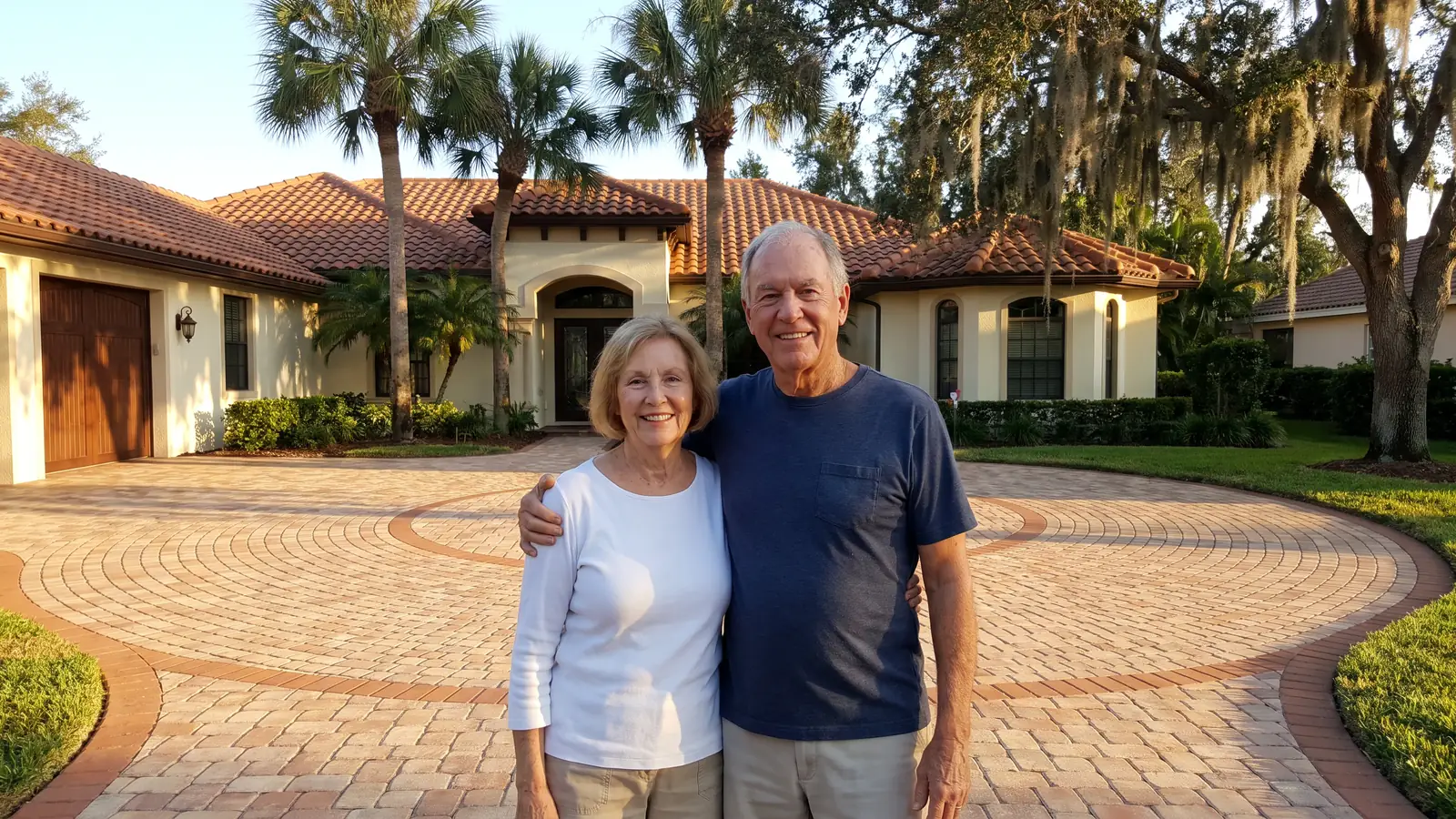
Paver sealing for San Jose homes
Paver Sealing in San Jose, FL
Pavers fading in San Jose? Get local help from Paver Sealing Ponte Vedra Beach. Call (904) 694-6107
- Brings out deeper paver color
- Fresh joint sand helps lock pavers in place
- Gives weeds less room to grow
- Makes the surface easier to keep clean
- Free estimate, no obligation
Request a Free Estimate
Free, no obligations.
Fast, careful paver sealing help in San Jose
San Jose paver sealing takes in everything from a 1920s Mediterranean Revival courtyard to a postwar ranch driveway. A local contractor cleans the pavers, replaces the joint sand and applies the sealer, and the estimate is free. Tell the contractor how old the home is and what the pavers look like today. If you request a quote now, you will hear back within 1 business day, usually much sooner.
A courtyard on a home like this should look as good as the house around it. Too often it has faded, with dark patches under the oaks and sand gone from the joints. Clean it, fill it and seal it, and the pavers finally match the walls they sit beside. Call (904) 694-6107 to talk it over, with no obligation.
Why San Jose chooses Paver Sealing Ponte Vedra Beach
San Jose owners often look for someone local because a historic courtyard and a 1950s ranch driveway call for different handling. Ask how yours would be treated when you request a quote.
Careful around old walls
On an older San Jose home, rinse water stays on the pavers and away from walls and decorative trim.
Clear price guide
Northeast Florida companies commonly publish $1.50 to $2.50 per square foot. Use that to judge any San Jose quote you receive.
A finish that fits
Matte often sits quietly beside a Mediterranean Revival front, while a wet look adds shine and shows scuffs sooner.
Your call, every step
The look at your San Jose pavers is free, and you decide whether the work goes ahead.
Get Your Free Estimate in San Jose
Tell us about your pavers in San Jose.
Free, no obligations
What paver problems show up most in San Jose?
Dark patches under moss-hung oaks
Large oaks with hanging moss shade the streets of San Jose, and that shade lands right on front walks and courtyards. Moss and algae grow where shade is heavy and pavers stay damp, which under a full canopy can mean most of a walkway. The cleaning plan has to start there, or sealer will lock the dark patches in. Growth can come back where shade and damp stay put, so ask what a realistic gap between cleanings looks like on your street.
Riverfront pavers near a salty estuary
San Jose sits along the east bank of the St. Johns River, and the water district describes the river near Jacksonville as a saltier estuary with strong tides. Pool decks and patios on those lots live with that air and water, and storms off the ocean can add to it. Anything the river leaves behind has to be rinsed away well before a coat goes on. That extra rinse is worth asking about in the quote, because it adds time on a large deck.
Mixed materials on a 1920s home
Only 21 original San Jose Estates houses remain, built in Mediterranean Revival style. A paver walk that meets walls like those needs careful rinse work, so the wash stays on the pavers and off the house. Decorative trim and older masonry deserve the same care, so point out old steps, low garden walls or decorative tile on the first visit. The same care applies to Spanish Revival bungalows nearby, where a small courtyard can sit right against an older wall.
A surprise coat on a re-platted lot
After 1947, lots across San Jose were re-platted and filled with postwar homes, so many pavers were likely added decades after the house went up. A past owner may have sealed them with an unknown product. Water-based sealer cannot go over solvent-based sealer, so that history is worth chasing down, and cloudy or peeling areas are a clue. If you can find the name of the product, or even the company that last did the work, the contractor has a head start.
Downpours that strip the joints
Jacksonville gets about 52 inches of rain a year, mostly from May through September and often in short, heavy bursts. Water sheeting across a San Jose driveway carries joint sand with it, and empty joints collect soil and weeds along the same seams each year. By the time you notice the weeds, the sand has been leaving for a while. Fresh sand and a sealed surface help slow the next round, which means less time on your knees with a weeding tool.
Does a San Jose Estates home need different care than a postwar ranch?
Usually yes, because the materials and the rules can differ. Original San Jose Estates homes date to 1925 and 1926, and preservation advocates got historic properties listed on the National Register in the 1980s. The city requires a Certificate of Appropriateness for exterior work in a local historic district or on a landmark, including driveways. Check your address on the Land Development Map first, then request a quote once you know where you stand.
After 1947, Stockton, Whatley, Davin and Company bought most of San Jose and re-platted it for postwar homes. That is why midcentury ranches and small wood-frame houses sit a short walk from Spanish Revival bungalows. Pavers on these lots tend to be add-ons rather than original features, so ask what lies beneath the current coat and when it went on. To get a free estimate for your ranch or bungalow, call (904) 694-6107.
Epping Forest and other gated or planned communities add one more step. State law also gives HOAs a say over appearance when their own papers allow it, so check before you switch finishes. Riverfront homes also sit beside a tidal estuary, which inland homes do not. Tell the contractor if you are on the river or inland when you request a quote, and expect a clear answer with no obligation.
What does paver sealing cost in San Jose?
San Jose homeowners will see Northeast Florida companies commonly publish $1.50 to $2.50 per square foot to clean, sand and seal. In San Jose, heavy shade growth and old coats tend to push a job up within that range. A home with a big riverfront deck will have a higher total simply because of size, even at the same rate per foot. To get a free figure for your property, request a quote.
Access is the other factor here. A walled courtyard takes more hand work than an open driveway off the boulevard, and a gated community needs entry details first. Sunken spots also need repair before sealing, since sealer locks in whatever is there, and that step can add a visit. Call (904) 694-6107 to hear what your quote would include.
| Paved area | Typical example | Clean, sand and seal |
|---|---|---|
| 300 sq ft | Small patio or walkway | $450 to $750 |
| 600 sq ft | Two car driveway | $900 to $1,500 |
| 1,000 sq ft | Large driveway or pool deck | $1,500 to $2,500 |
| 1,500 sq ft | Driveway plus pool deck | $2,250 to $3,750 |
Math based on the $1.50 to $2.50 per square foot that Northeast Florida paver companies published as of November 2026. Your contractor sets the actual price after seeing the surface. Repairs, leveling and stripping failed sealer are usually extra.
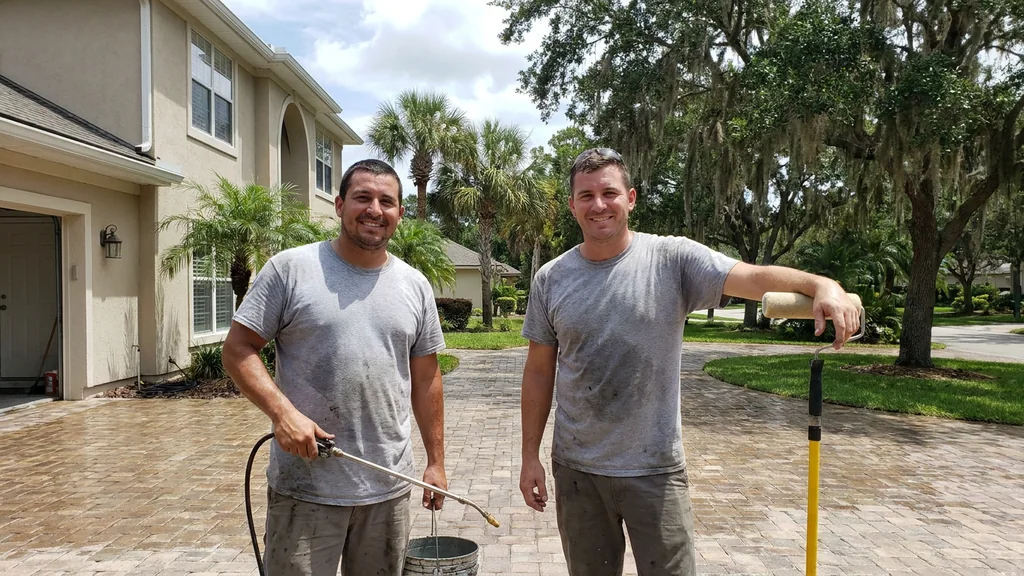
How does a paver sealing job work in San Jose?
Look at the house as well as the pavers
The first visit in San Jose covers more than square footage. The contractor notes walls, trim and steps that meet the pavers, because those need protecting during the wash. Low or lifted sections get marked for repair, because a coat of sealer holds a dip exactly where it is. If the home may be historic, have your Land Development Map result handy, and riverfront owners should mention how the lot drains.
Lift the growth without soaking the walls
Washing removes the dark growth that collects under oaks and any residue near the river. Water and spray get directed away from older masonry and wood, which matters most on the original 1920s homes. On a walled courtyard, drainage needs a look before work begins. Once it is clean, the true color of your San Jose pavers shows again, along with any stains that still need work.
Top up the joints
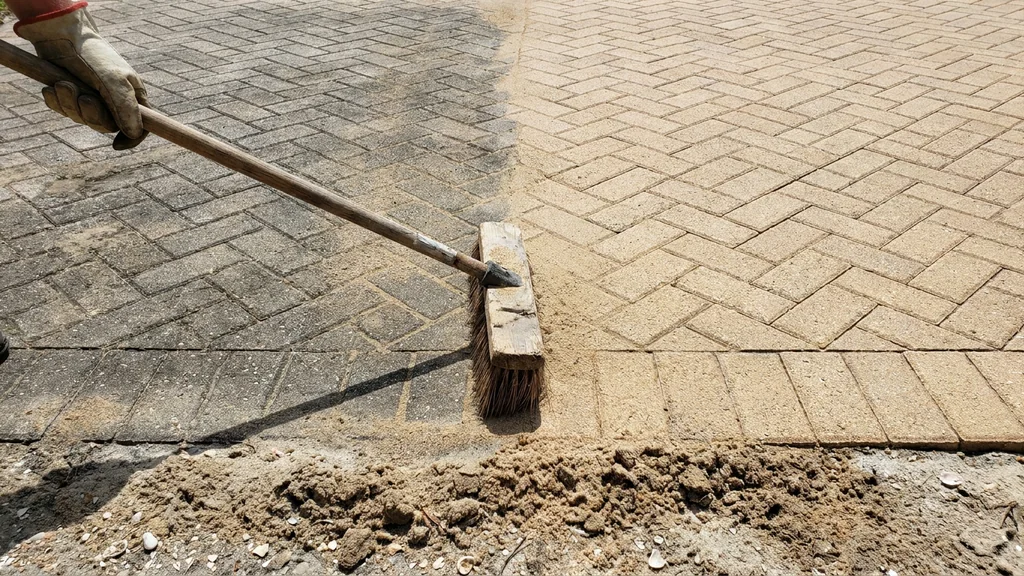
New sand goes in after the wash, because washing removes what was there. Long San Jose driveways lose sand to heavy rain, and joints left empty collect soil. The sand gets swept in and the surface gets cleaned of any extra before the sealer goes anywhere near it. On older installations, expect the joints to take more than you might guess, since years of rain may have emptied them.
Wait for dry pavers, not a dry forecast
Sealer needs a dry surface, and a sunny morning does not mean the shaded side is ready. Pavers under a full canopy in San Jose can hold moisture after the driveway looks dry. Near the river, tides add one more thing to watch on the lowest ground. The contractor should check the dampest spot before going further, even if that means coming back another day.
Seal it and stay off for a while
The sealer goes on in your chosen finish, often sprayed and then back-rolled into the joints. One Jacksonville company figures a few hours before you can walk on it and about a day for cars. San Jose pavers commonly get quoted two to five years between coats, and heavy shade is a good reason to check yours sooner. Write down the product name and file it with your San Jose home records, so the next coat starts with an answer.
Complete paver services in San Jose
On a San Jose property the sequence is wash, sand, dry and seal, in that order every time. The wash lifts dark growth and grime from under the oaks. New sand then fills the joints, the pavers dry through, and the sealer goes on to protect everything underneath. For a sense of how long your courtyard or driveway would take, call (904) 694-6107 and describe its size.
Courtyards, front walks, pool decks and driveways all turn up in San Jose. A walled courtyard needs gear carried in by hand, while a long drive off San Jose Boulevard is easy to reach. Waterfront pool decks need a closer look at what the river leaves behind. List each surface and how a truck can get near it when you request a quote.
Sealer choice starts with what is already on your pavers, since water-based sealer cannot go over solvent-based sealer. Then comes the look you want beside your front door. Matte tends to stay quiet beside Mediterranean Revival walls, and a wet look shows scuffs sooner on a drive with daily tires. To go over which finish suits your San Jose home, call (904) 694-6107 and describe the front of the house.
Heavy rain from May through September makes summer dates less certain in San Jose. Sealer needs a dry surface, and pavers under a full oak canopy take longer to get there than a sunny riverfront deck. A contractor who knows these streets will build in room for that, and say so. For a realistic date, request a quote and mention how much shade you get.
Questions to ask before you hire
- What do you do if the sealer dries streaky?
- How do you keep the new sand from washing out?
- If I spot a problem next month, how do I reach you?
- Will you send me a copy of your insurance and any license this work needs?
- Can I see wet look and matte samples before I choose?
- Do I need to shut off my irrigation, and for how long?
- What brand of sealer do you plan to use on my pavers?
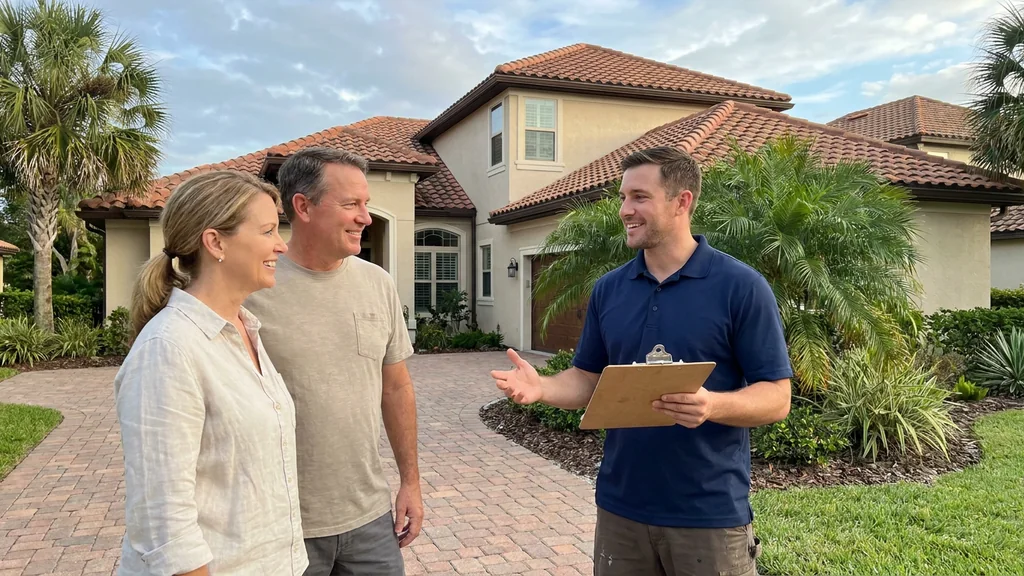
Why local matters in San Jose
Knowing San Jose means knowing that a street can jump from 1925 to 1955 in a few houses. A Mediterranean Revival walk and a ranch driveway do not get the same prep. A contractor who has seen both will not treat them alike, which protects the older house from a rushed wash. Describe your home when you request a quote, and you will get a quote with no obligation.
It also pays to understand the river, which is tidal and salty near Jacksonville, so homes on the east bank deal with that every day. Pool decks there see conditions a block inland does not, which means the rinse and the schedule both change. Expect a contractor who knows the east bank to ask about high water before setting a date. Call (904) 694-6107 if you are on or near the water, and ask how the contractor cleans and schedules around it.
Shade is the last piece of local knowledge. Large oaks with hanging moss cover many San Jose streets, and they change how long pavers take to dry and how fast growth returns. Anyone who has worked here plans for that from the start, instead of promising a date the shade will not allow. If your walkway sits in full shade, request a quote and say so, so the plan fits your lot.
How did San Jose end up with such a mix of homes?
The 1920s land boom built a grand plan and then stopped it cold. San Jose Estates laid out Spanish-named streets around a hotel, with Donald Ross drawing up the golf course that is now San Jose Country Club. The hotel closed in 1928 and became The Bolles School in 1933, and Bolles Hall still stands on the riverfront campus. If your pavers sit near that campus, call (904) 694-6107.
Alfred and Jessie Ball duPont built Epping Forest on land meant for a second hotel, and it now anchors a private community. Verona Park and Crabtree Park are among the neighborhood's parks today. San Jose Episcopal Church still uses the old administration building, and one original gate survives along San Jose Boulevard. Goodbys Creek roughly marks the line with Mandarin to the south, so if you live along that stretch, you can request a quote.
Frequently Asked Questions
How much does it cost to get pavers sealed in San Jose?
A San Jose quote will usually land near the $1.50 to $2.50 per square foot regional companies publish for the full clean, sand and seal. Riverfront decks add up because of their size, and shade growth adds cleaning time. Ask for the total square footage in writing.
Are patio pavers in San Jose supposed to be sealed?
They do not have to be, but sealing helps a San Jose patio hold its joint sand. A Landscape Ontario article names stabilizing that sand with sealer as the leading way to prevent weeds. It also gives the pavers one even color again after a cleaning.
Can I pressure wash my paver patio in San Jose?
You can, but washing takes joint sand out, so it has to be replaced before any sealer goes on. On a San Jose home, the spray also has to stay off older walls and trim. Many owners leave the wash to the contractor doing the sealing, since the steps run back to back.
What common mistakes when laying pavers show up later in San Jose?
The common ones are too little base, missing edge restraints and joints that were never fully filled. A paver maker also lists poor drainage slope. On San Jose driveways those mistakes show up as dips and gaps, which need repair first because sealing locks in whatever is there.
Does a historic San Jose home need city approval for paver sealing?
It might, depending on the address. Jacksonville requires a Certificate of Appropriateness for exterior work in a local historic district or on a landmark, and driveways are on that list. The city page does not mention sealing by name, so check the Land Development Map and ask staff.
How long does a coat last on San Jose pavers?
Two to five years is the usual quote for a San Jose driveway or courtyard. Full oak shade and daily tires are reasons to check sooner. A wet look shows scuffs before matte does, so the finish you pick can change how soon the surface looks tired.
Can new sealer go over the old coat on my San Jose driveway?
Sometimes, but water-based sealer cannot go over solvent-based sealer. The contractor has to work out what is already there, which can be tricky on a re-platted postwar lot with several past owners. Any receipt or product name you can find will help.
When can I drive on freshly sealed pavers in San Jose?
Plan on keeping cars off for about a day. One Jacksonville company says foot traffic is usually fine within a few hours, depending on the product and the forecast. Under San Jose oaks a coat may take longer, so ask for the exact time before the crew leaves.
Ready for a Free Estimate in San Jose?
Call (904) 694-6107 and tell us about your pavers.
Free, no obligations