
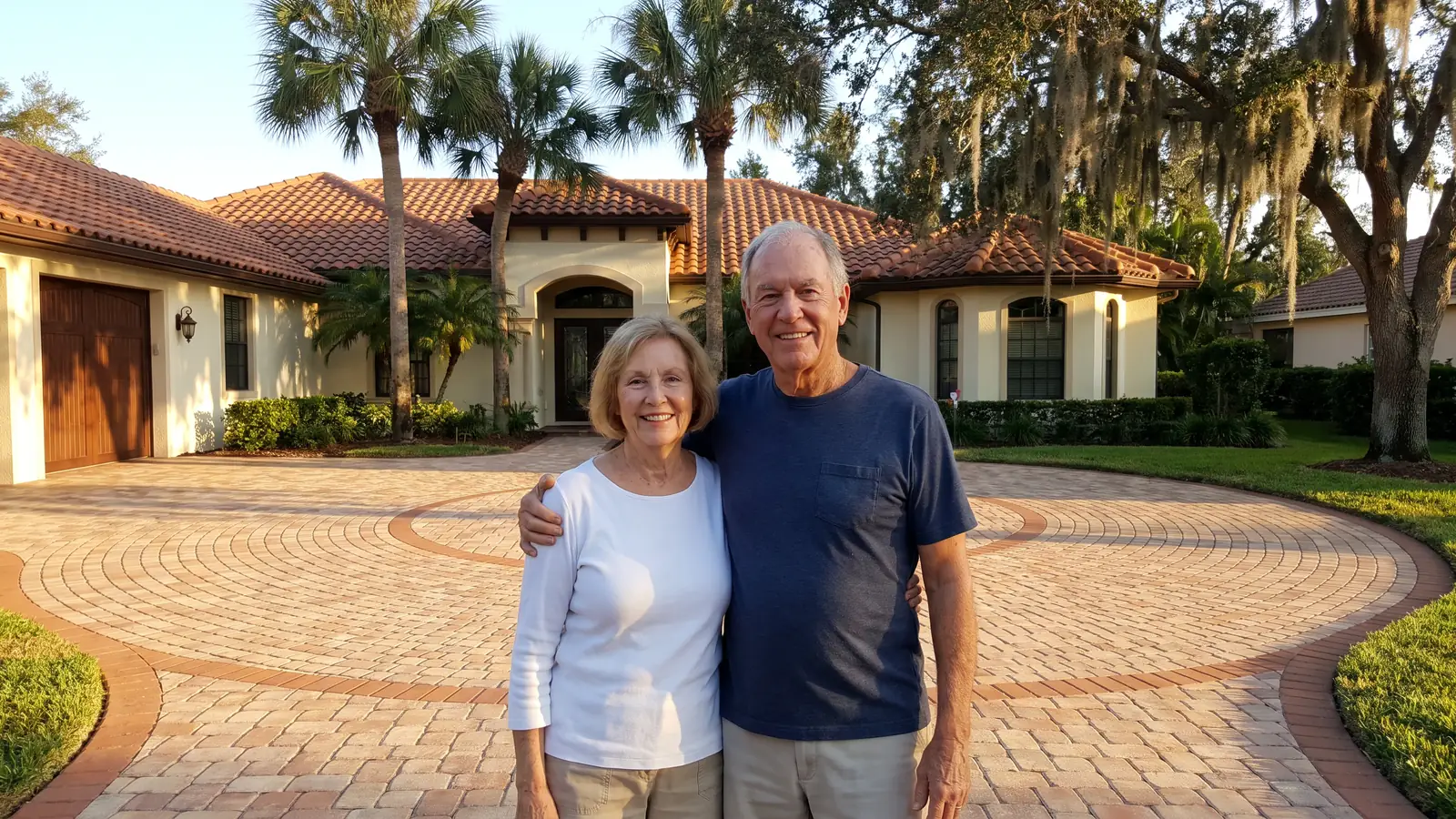
Richer color, firmer joints and a barrier against salt
Paver Sealing in Ponte Vedra Beach, FL
Free paver sealing estimates in Ponte Vedra Beach start with a call to (904) 694-6107.
- Brings out deeper paver color
- Fresh joint sand helps lock pavers in place
- Gives weeds less room to grow
- Makes the surface easier to keep clean
- Free estimate, no obligation
Request a Free Estimate
Free, no obligations.
Who can seal pavers in Ponte Vedra Beach, and how soon?
A local contractor can seal pavers in Ponte Vedra Beach, FL, and a reply usually arrives within 1 business day, often much sooner. Estimates are free and carry no obligation. To get moving, call (904) 694-6107.
Sealing deepens paver color, helps hold joint sand in place and makes it harder for salt, oil and mildew to soak in. Think about the walkway you cross every evening, dull and gritty after months of sea breeze, looking rich and tidy again. A driveway takes tires and oil, and a pool deck takes water and bare feet, so each surface wants its own plan. Describe how yours gets used when you request a quote.
Paver Sealing Ponte Vedra Beach Is Proud to Serve Northeast Florida
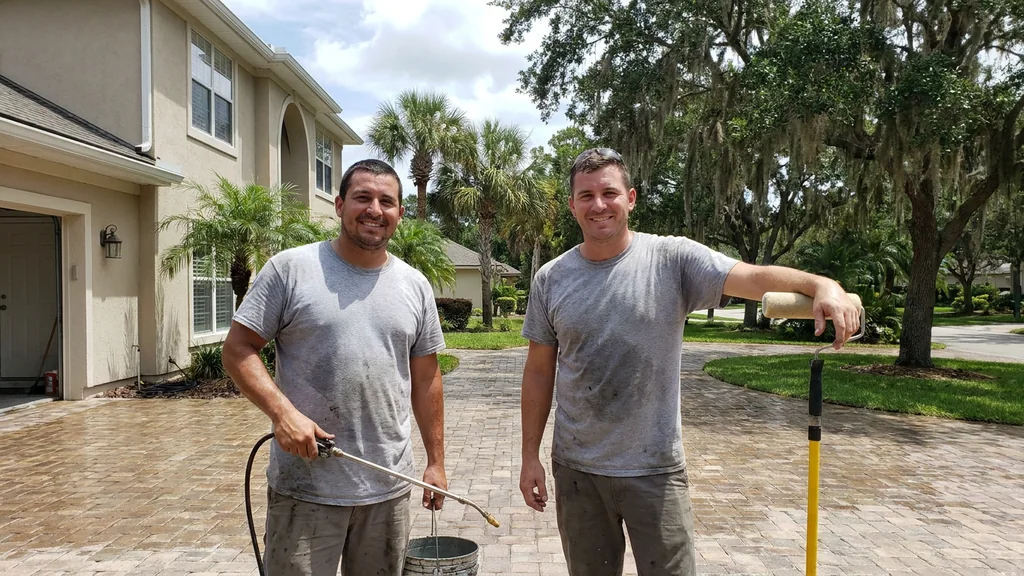
What does a full sealing job cover?
A complete job covers four stages: inspection, cleaning, new joint sand and the sealer itself. To walk through the stages for your property, call (904) 694-6107.
A close look first
Sunken spots, broken pavers, old coatings and drainage all get checked before anyone quotes the work.
Deep cleaning
Dirt, algae, rust and efflorescence come off with cleaners made for concrete pavers and a wide fan tip.
New joint sand
Dry sand gets swept in and compacted. Full joints keep pavers from drifting and leave seeds nowhere to root.
The protective coat
Sealer goes on a clean, dry surface at the coverage printed on the product's data sheet.
How can I tell it is time to seal?
The usual signs are chalky color, joints that have dropped and water that soaks in rather than beading. A Jacksonville installer suggests a quick check: drip water on the surface and see whether the pavers darken. Catching low joints early keeps a maintenance job from becoming a repair job. For a second opinion on yours, call (904) 694-6107.
Which sealer holds up best near the ocean?
No single product wins at every coastal home, so ask which one the contractor plans to use and why. Surebond, a sealer maker, says its two-part water-based urethane protects against salts and carries an antifungal for shaded areas and pool decks. To talk through options for your surface, call (904) 694-6107.
Unilock prefers water-based sealers whenever possible because they are low odor and clean up easily. It also rates solvent-based products as somewhat tougher, though they need fully dry pavers and joints. Ask how the contractor checks for moisture when you request a quote.
Wet look, semi-gloss or matte: which fits a coastal home?
Pick wet look for dark, saturated color, semi-gloss for a softer sheen and matte for the most natural appearance. A Jacksonville installer says most of its clients land on semi-gloss and warns that wet look shows wear in drive lanes. Near a pool, traction should weigh more than shine. To see samples side by side, request a quote.
How long will a coat last in salt air?
Plan on resealing about every three years close to the water and up to five years farther inland. Unilock's general guide is three to five, while a company working around Ponte Vedra Beach recommends 2.5 to 3 on the coast. Full sun, sprinklers and car traffic shorten it. To have your current coat checked, call (904) 694-6107.
Do extra coats mean extra protection?
No, piling on more sealer can work against you. Unilock warns that applying sealers too often creates a milky haze, and Surebond says excess product can reduce breathability and make a surface slippery. Sealer also adds no structural strength, according to the Concrete Masonry and Hardscapes Association. Ask about coverage rates when you request a quote.
When should pavers be sealed around here?
Pick a dry stretch, and if the pavers are new, wait until efflorescence has cleared. Unilock says that white haze typically takes two to three months and sometimes up to a year to fade. If your pavers went in recently, mention the install date when you call (904) 694-6107.
Unilock asks for clear skies 24 to 48 hours around the job and a temperature between 50 and 90 degrees. Surebond says surface temperature on one of its sealers should stay under 120 degrees, and that hot pavers can be misted first. Automatic sprinklers need to stay off through drying. To line up a date around the forecast, request a quote.
Which areas around the home can be sealed?
Driveways, pool decks, patios and front walks can all be sealed. Traffic and moisture differ on each, so one plan rarely fits them all. To start with the area that bothers you most, request a quote.
Driveways
Tires, oil and direct sun all land here first. Sealing here aims for even color and full joints under the weight of a car.
Pool decks and lanais
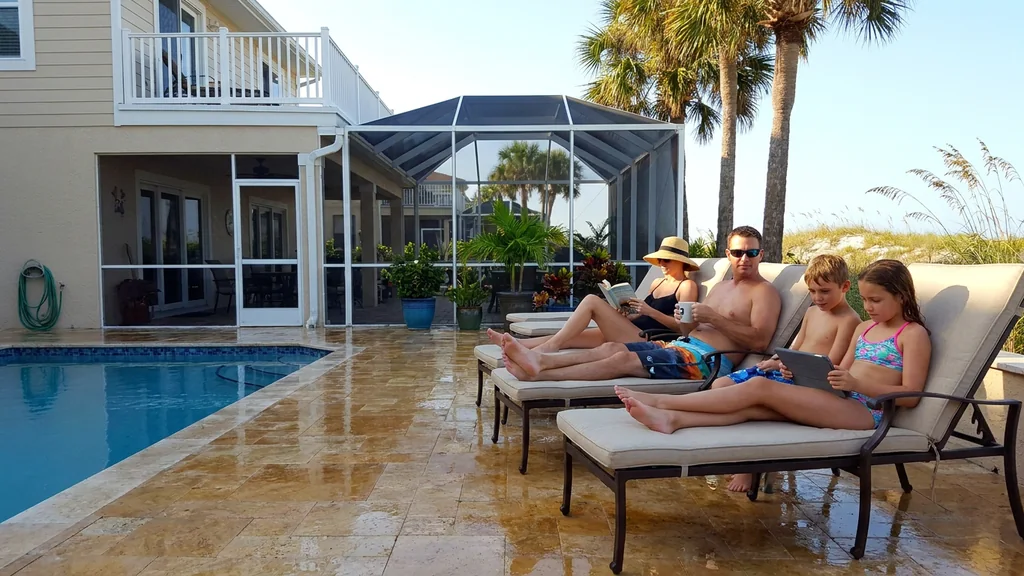
Splash water, sunscreen and bare feet make this the wettest paving on the property. Sealing around a pool has to account for traction as much as looks.
Patios and courtyards
Shaded seating areas hold moisture, so green film settles in. Sealing on a patio goes after that growth and the grit around it.
Front walks and entries
Narrow paths sit beside planting beds and catch soil, mulch and sprinkler water. Sealing near the front door is a small job that changes how the whole house greets people.
What wears out pavers in Ponte Vedra Beach?
Five problems lead the list here: salt film, sun fading, moving joint sand, green growth and rust stains. Most of them get worse slowly, then all at once. To find out which ones you are dealing with, call (904) 694-6107.
1. Salt film from the ocean
UF/IFAS Extension explains that breaking waves release salt that blows inland, with less of it the farther you go. Beachfront homes get the heaviest dose.
2. Chalky, sun-bleached color
A Jacksonville installer says unsealed concrete pavers here fade noticeably within three to five years. Open driveways and pool decks go first.
3. Joint sand on the move
The Concrete Masonry and Hardscapes Association says pavements hit by regular, heavy rain benefit from stabilized joint sand. Sandy ground and summer downpours keep that pressure on.
4. Green growth near the marsh
North sides of houses and yards along the Intracoastal stay damp, and algae likes damp. Left alone, a green walkway turns slick underfoot.
5. Orange stains from irrigation
Rusty lines along edges usually come from iron in sprinkler water, a Ponte Vedra area washing company notes. Those stains call for a rust remover and should come off before any coat goes on.
How much should paver sealing run in Ponte Vedra Beach?
Expect $1.50 to $2.50 per square foot in Ponte Vedra Beach, going by rates that Northeast Florida companies post. Size drives the total first, and condition drives the rest. A Jacksonville installer adds $1 to $2 per square foot when failed sealer has to be stripped. To turn these ranges into a real number for your home, request a quote.
Only need a good wash? Read about paver cleaning and joint sand, or see which communities are covered near Ponte Vedra Beach paver sealing.
| Paved area | Typical example | Clean, sand and seal |
|---|---|---|
| 300 sq ft | Small patio or walkway | $450 to $750 |
| 600 sq ft | Two car driveway | $900 to $1,500 |
| 1,000 sq ft | Large driveway or pool deck | $1,500 to $2,500 |
| 1,500 sq ft | Driveway plus pool deck | $2,250 to $3,750 |
Math based on the $1.50 to $2.50 per square foot that Northeast Florida paver companies published as of November 2026. Your contractor sets the actual price after seeing the surface. Repairs, leveling and stripping failed sealer are usually extra.
Why hire someone who works this coast?
A contractor based near the beaches sees salt, sand and shifting joints every week. You still get the price in writing and all the time you want to think it over. To begin, call (904) 694-6107.
Companies that know the coast
A contractor working these beaches already deals with salt film, sandy ground and pool decks that never fully dry. You spend less time explaining the basics.
Free, with no strings
The estimate is free. You can turn the price down and owe nothing.
Published numbers to compare
Northeast Florida companies post what they charge per square foot, and those figures are on this site. The first quote you hear will have something to stand next to.
Your pace, your call
Ask for the price in writing and take a few days with it. Our contractor standards page lists what to check before you say yes.
Ready for a free paver sealing estimate?
Call or use the quick form. Expect a reply within 1 business day, often much sooner.
Free, no obligations
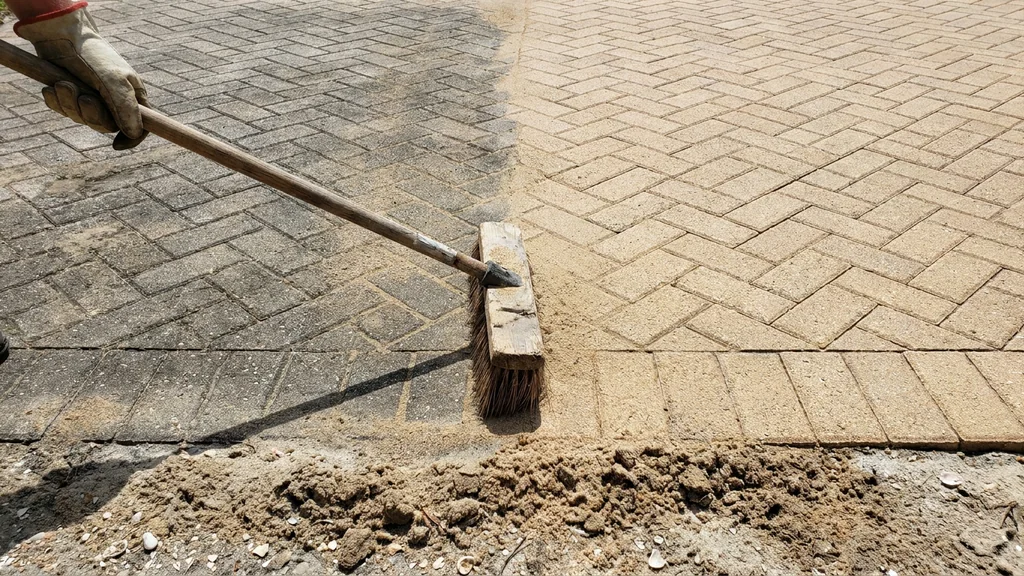
How does the sealing process run from start to finish?
The work follows five stages, from the first inspection to a final walk. To get a date on the calendar, call (904) 694-6107.
1. Inspect the surface
Before pricing the sealing work, the contractor looks for sunken spots, broken pavers, old coatings and where water drains.
2. Protect and wash
Plants get covered and sprinklers get shut off. A pressure washer with a wide fan tip then works at a low angle so the sand stays put.
3. Treat what the wash left
Rust and white efflorescence get their own cleaners. Efflorescence cleaner goes on with a low pressure pump at 30 to 100 PSI, then rinses off with plain water.
4. Sand the joints
Once the pavers are dry, ASTM C144 joint sand gets swept in and compacted with a vibrating plate. Extra sand comes off with a blower.
5. Finish and review
Sealer, when chosen, goes on by low pressure sprayer and foam roller. You walk the area with the contractor and hear when to stay off it.
Frequently Asked Questions
What is the average cost to seal pavers in Florida?
Around Northeast Florida, count on $1.50 to $2.50 per square foot for a full clean, sand and seal, which is the range Jacksonville area companies publish. For a 600 square foot driveway in Ponte Vedra Beach, that works out to roughly $900 to $1,500. One Jacksonville installer charges $1 to $2 more per square foot to strip a failed coat.
What is the average price for paver sealing?
The middle of the published range is $2 per square foot, so a 1,000 square foot pool deck would average about $2,000. Your own quote depends on condition, access and the product used. Get it in writing so you can compare.
What are the downsides of sealing pavers?
The biggest downside is that it has to be repeated, about every three to five years according to Unilock, a paver manufacturer. High gloss products can also add slipperiness when wet. Old and new sealers can clash, so a test patch comes first on any reseal.
Is it good to seal pavers in Florida?
Yes, for most concrete pavers. A Jacksonville installer points to Florida sun, summer rain and mildew as the reasons. Unilock adds that its pavers stay structurally sound without sealer, so the payoff is color, stain resistance and steadier joint sand.
How often do pavers near the ocean in Ponte Vedra Beach need sealing?
Plan on about every three years if you live close to the water. Unilock gives three to five years as a general guide, and a company sealing pavers around Ponte Vedra Beach suggests 2.5 to 3 years on the coast. Drive lanes wear faster than patios.
Will sealer make a Ponte Vedra Beach pool deck slippery?
It can, so the finish and additives matter. Unilock warns that high gloss sealers may add slipperiness when wet and calls matte a safer choice. Surebond says pool decks and travertine may need an anti-slip additive. Ask for that option by name.
Can a travertine pool deck be sealed?
Yes, but this stone needs its own product decision. It is more porous than a concrete paver, and a Jacksonville installer recommends a matte, penetrating sealer for it. Companies around Ponte Vedra Beach say it is common here, so ask about the contractor's experience with it.
How long should you stay off freshly sealed pavers?
Plan for up to 48 hours, which is the dry stretch Unilock asks for while sealer cures. Keep cars and foot traffic off, and leave automatic sprinklers shut down. Water on a fresh coat can leave white marks.